Winter Safety for Older Adults: Preventing Slips and Falls
Fall prevention tips to help older adults enjoy outdoor winter activities
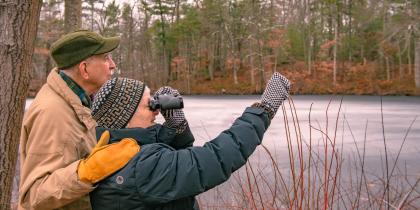
As we age, concerns about falling can make winter conditions feel overwhelming. Falls are more common among older adults, and many begin with preventable slips or trips outside of the home.
If you’re an older adult, don’t let a fear of falling keep you homebound! If you prepare and stay aware, you can enjoy being out and about even during the cold New England winters.
Why do we fall?
Sensory input from vision, joints, and sense of touch — especially the bottom of the feet — provides information to the brain about the location and position of our body. Muscles and nerves respond to help us adjust to changes in position that could cause us to lose our balance.
When these systems are affected by weakness, joint arthritis, neuropathy, or illness and disease, the ability to coordinate and compensate for sensory input is reduced or delayed, leading to loss of balance and falls.
The good news is that there are steps older adults at risk for falls can take to increase safety when venturing outdoors.
Plan ahead for winter activities
- Plan your day’s activities to avoid fatigue.
- Know where you are going ahead of time.
- Give yourself plenty of time to get to your destination. Take your time — hurrying can increase fall risk.
- Turn on your porch light if you will be returning after dark.
Be prepared
A little preparation before heading out can help you stay steadier on your feet. If you take medication, make sure you take it correctly as prescribed and anticipate any side effects. Bring a snack if you have diabetes to avoid low blood sugar levels, and bring water to stay hydrated.
Footwear and clothing also play an important role in winter safety. Wear low-heeled shoes with rubber traction, and use caution with winter boots as they can be heavy and may restrict your toes. Be aware that heavy or long winter coats can impede movement, and hoods or hats may decrease your field of vision. Consider using traction devices on shoes to reduce the risk of falls on icy surfaces.
At home, keep pathways clear of ice and snow. Assistive devices, especially walker wheels and canes, can accumulate salt and slush, making your floors slippery. Have a towel or rug available to wipe them off.
Poorly lit areas can also increase fall risk, so travel in well-lit areas or carry a flashlight when needed.
Optimize balance
Winter weather conditions, such as snow, rain, wind, and cold temperatures, can be distracting and affect balance. Having both hands free can improve reactions that help you maintain balance, so consider wearing a crossbody bag, backpack, or fanny pack rather than carrying a bag. Make sure your bag is not too heavy.
It’s also important to use the correct assistive device prescribed for outdoor environments. Ensure the tips of your cane or walker are in good condition, and replace them if they’re not.
Be aware
Awareness is a powerful tool for fall prevention. Always be aware of your surroundings, and use handrails when available. Take time to assess the height of curbs before stepping up or off and use ramps and curb cutouts to avoid curbs and steps.
Always use crosswalks and designated walking areas, and avoid stepping over concrete curbs in parking lots.
Be aware of outdoor surfaces — sidewalks can be uneven. Cracks, debris, and tree roots can become tripping hazards. Be careful when walking in areas of busy pedestrian traffic, such as subway stations and storefronts. Avoid walking on icy patches, stay in treated areas, and do not step over snowbanks. When entering buildings, look for wet floors, which can be very slippery.
It’s important to know that for some people, shoveling snow can pose a fall risk. Shoveling snow also increases the risk of a heart attack for some people due to the sudden increase in heart rate and blood pressure. Talk to your doctor before shoveling snow, especially if you have a history of heart disease, other chronic conditions, or live a less active lifestyle.
Fall prevention and recovery at home in Greater Boston
If you experience a fall or are worried about your risk of falling, Hebrew SeniorLife Home Health professionals can assess your balance, mobility, and home environment and suggest practical modifications to increase safety. Let us help get you back on the path to wellness!
If you or your loved one needs home care after an illness, hospitalization, injury, or fall, learn more about our Home Health services today.
Blog Topics
Learn More
Home Health
Hebrew SeniorLife Home Health will send registered nurses and home health aides to your home to provide skilled care any time you need it.