How Walkable Neighborhoods Enrich Senior Living Communities
Discover how life in a walkable community can help you stay connected, active, and engaged.
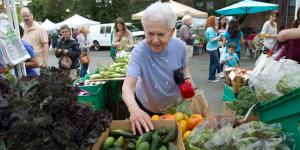
At Hebrew SeniorLife’s Center Communities of Brookline, it’s common for residents to run into each other at the farmer’s market across the street, picking up produce for dinner or treating themselves to ice cream from a local vendor. It’s an experience made possible by Brookline’s vibrant walking culture.
Walkability looks different across Hebrew SeniorLife’s senior living communities. Some locations feature stunning on-site walking trails surrounded by nature. Others are located in neighborhoods where residents can step outside to find restaurants, shops, places of worship, and public transportation just a stroll away.
This accessibility supports independence, well-being, and connection in daily life. Here are five ways living in a walkable neighborhood helps residents thrive in senior living communities:
1. Maintaining independence and freedom
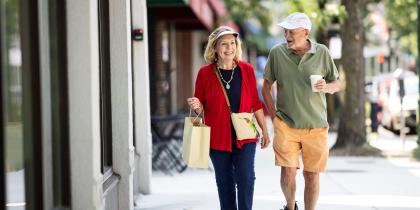
Living in a walkable community means being able to make last-minute plans with family or friends. It makes everyday spontaneity possible, whether that’s meeting up with a friend for coffee, taking in views at a nearby park, or attending a community event.
When driving or scheduling transportation isn’t necessary, you can decide on the spot to do these things. For many people, having that freedom makes everyday life feel more effortless and enjoyable.
2. Staying healthy and active
Walking isn’t just a way to get around — it’s one of the simplest yet most effective ways to stay healthy. According to the Mayo Clinic, walking offers health benefits that range from preventing or managing conditions like heart disease to strengthening muscles, bones, and the immune system.
One study found that older adults in more walkable neighborhoods engage in more moderate-to-vigorous physical activity than those in less walkable areas. Participants with mobility impairments were as active as those without them living in less walkable areas, highlighting how our neighborhoods can affect our physical activity levels.
For residents of Jack Satter House in Revere, MA, life on the beach can make staying active feel effortless. As one resident shares, “Jack Satter House, for me, has been a stress-free, happy, and healthy place to live. My view is fantastic. Even when the weather is not great, the ocean is still exhilarating. I am blessed to be living here.”
3. Building community
In walkable neighborhoods, connecting with others can be easier. One study found that older adults living in highly walkable neighborhoods participate more frequently in community activities, such as stopping by a cafe or the theater.
From a walking group at Jack Satter House to the historic Coolidge Corner Theatre just down the road from Center Communities, becoming part of the local community is easier in walkable neighborhoods.
“We also redid an area surrounding Centre Street in Brookline with beautiful walking paths and benches, and tables that have a checkerboard on them. Residents will sit there with family, friends, and pets,” says Jill MacDonald, associate executive director at Center Communities of Brookline.
4. Supporting emotional well-being
Being able to step outside and enjoy the fresh air, take in a beautiful view, or admire tree-lined sidewalks in an urban environment can make a world of difference for well-being. Walking has been found to improve mood, boost sleep, and even lower the risk of cognitive impairment.
For many older adults, having a peaceful place to walk or sit outside can provide a sense of grounding, stress relief, or a meaningful connection to nature. Residents of Jack Satter House in Revere often take advantage of the beach location to enjoy a sense of peace and tranquility.
5. Accessibility and inclusion for all
While walkability is important, communities should be easy to navigate for people of all mobility levels and personal preferences. Thoughtful infrastructure, such as pathways, benches, and reliable public transportation, can make it easier for everyone to go out and enjoy their neighborhood.
Features like on-demand shuttles and accessible public transportation can further support residents who may not be able to or prefer not to walk long distances, yet still seek independence and convenience in a neighborhood that feels like home.
Hebrew SeniorLife offers a community for every lifestyle
Whether you prefer a walkable urban neighborhood, access to public transportation, or peaceful natural surroundings, Hebrew SeniorLife offers communities designed to support the independence, well-being, and quality of life of every resident.
At Jack Satter House, that might mean deciding on a spontaneous beach day when the weather’s just right. Meanwhile, Center Communities of Brookline’s urban location means residents appreciate being steps away from shops, public transportation, and community events.
Leyland Community in Dorchester offers similar benefits, with walkable streets and nearby public transportation connecting residents to their neighborhood in Upham’s Corner and to the rest of the city of Boston. For those who prefer a more suburban feel, Simon C. Fireman Community in Randolph offers the comfort of a quieter neighborhood while still offering convenient access to public transportation. A Fireman Community expansion added walking paths in both courtyards, which contain exercise stations and benches for residents to enjoy.
Our continuing care retirement communities, NewBridge on the Charles in Dedham, MA, and Orchard Cove in Canton, MA, offer miles of scenic walking trails and inviting outdoor spaces directly on their expansive campuses, providing a serene natural setting for those seeking a tranquil environment.
Interested in exploring which community might be the right fit for your needs? Find a service or community online today.
Blog Topics
Learn More
Senior Living
Hebrew SeniorLife offers a variety of senior living options, including independent living, assisted living, and enhanced living. There are options for every lifestyle and budget.
Senior Living in Brookline
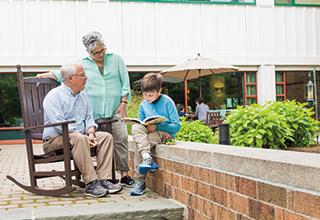
Center Communities of Brookline is an active apartment community for older adults, located near Coolidge Corner and Washington Square. The community includes options for seniors of all income levels, plus amenities like on-site dining and health care, lifelong learning opportunities, wellness programming, and supportive services.