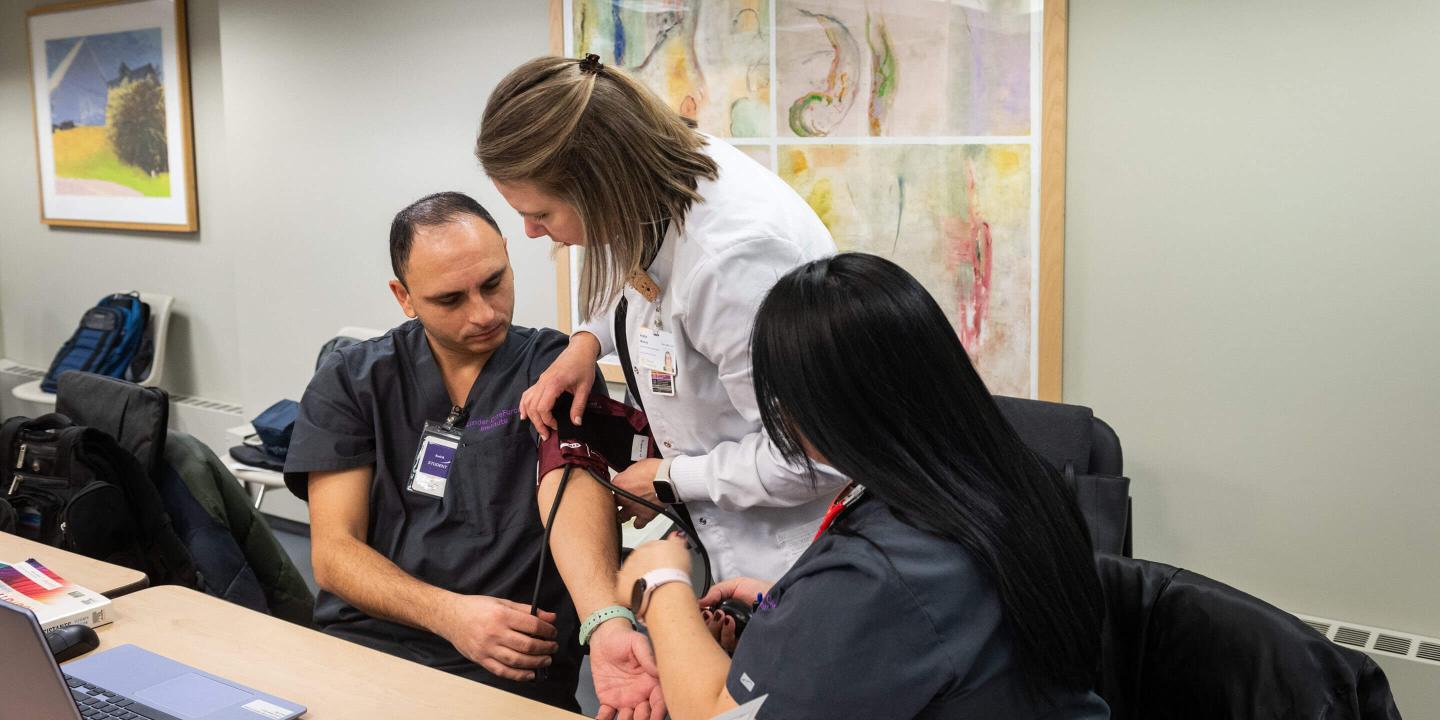
Student Learning Outcomes
By the end of the program, students will be able to:
- Define the role, responsibilities and scope of practice of the evolving nurse aide delivering care to consumers in various health care settings.
- Demonstrate competence in the provision of inclusive, person-centered care skills required of the consolidated nursing aide when caring for consumers with diverse cultural backgrounds.
- Demonstrate effective communication skills, including reporting and recording, in order to interact effectively with consumers, families, faculty and members of the health care team.
- Demonstrate professional skills while delivering care to consumers within a legal and ethical framework.
- Apply principles of personal and environmental safety and infection control when delivering care to consumers in various health care settings.
- Recognize the role in supporting aging consumers who are advocating for health care services and community inclusion.
- Demonstrate understanding of basic anatomy and physiology of body systems, medical terminology and care delivery for common diseases, including dementia and mental health.
- Incorporate knowledge of stages of growth and development and the aging process into care provision, including end of life care.
Program Outcomes
Program outcomes are measurable indicators used to evaluate how effectively the program is meeting its mission and goals. These outcomes reflect student achievement and program performance and are reviewed on an annual basis (September–August). Examples include program completion rates, state certification exam pass rates, and job placement rates.
- Total Completion Rate: The percentage of enrolled students who successfully complete all required training hours—at least 75 classroom hours and 25 hours of supervised clinical practice—within an academic year.
- Expected level of achievement: 80%; we have a 91% completion rate.
- Total State Certification – Pass Rate: The percentage of graduates who pass both components of the Massachusetts Nurse Aide Competency Evaluation Exam (Knowledge Test with a minimum score of 76% and the Manual Skills Test).
- Expected level of achievement: 75%. We have an 84% pass rate.
- Total Job Placement Rate: The percentage of graduates who become state certified and secure employment in a health care facility within 90 days of certification.
- Expected level of achievement: 75%
Cancellations, Early Dismissals, Holidays
Students will be notified by Lunder CareForce Institute staff at least two hours before class or clinical if it is canceled or delayed because of bad weather. If a class needs to be canceled or dismissed early and this can be planned ahead of time, students will be told by text message or group email. If class is already in session and something unexpected happens, the instructor will announce an early dismissal in person. Whenever possible, students will be informed about class cancellations or schedule changes as soon as possible.
The following holidays are observed at Lunder CareForce Institute with no classes scheduled:
| Date | Holiday |
|---|---|
| January 1, 2026 | Holiday closure (New Year’s Day) |
| January 19, 2026 | Holiday closure (Martin Luther King Day) |
| February 16, 2026 | Holiday closure (President’s Day) |
| May 25, 2026 | Holiday closure (Memorial Day) |
| June 19, 2026 | Holiday closure (Juneteenth) |
| July 4, 2026 | Holiday closure (Independence Day) |
| September 7, 2026 | Holiday closure (Labor Day) |
| November 11, 2026 | Holiday closure (Veterans Day) |
| November 26-27, 2026 | Holiday closure (Thanksgiving Day) |
| December 25, 2026 | Holiday closure (Christmas Day) |
Faculty
All instructors in the Nurse Aide Training program are chosen to meet the rules set by the Massachusetts Department of Public Health (105 CMR 156.000). Students who are enrolled can find contact information for all instructors in the program syllabus.
Unsubscribing Notice
By completing the application, you are opting in to getting emails regarding next steps in the process and more information on the program. If you wish to opt out at any time, you can unsubscribe at the bottom of the email communications or email info@lundercareforce.org to be removed from our mailing list. If you opted in to SMS texting, you can opt out anytime by texting back to opt out or by emailing info@lundercareforce.org.
Policies
I. Purpose/Policy:
This policy meets clinical site requirements. Lunder CareForce Institute conducts CORI checks to help keep patients, residents, students, and staff safe.
II. Definition of Terms:
- CORI (Criminal Offender Record Information): Criminal history information from the Massachusetts Department of Criminal Justice Information Services. This may include arrests, charges, convictions, and case results.
- Written Consent: A signed form that allows the Institute to request and review a CORI report, as required by law.
- Authorized Staff: Trained employees who are allowed to request, review, and store CORI information while keeping it confidential.
III. Procedure:
When Screening Occurs
- CORI checks are done before a student is accepted into the program.
- Students must give written consent.
Evaluation of Results
- The Institute reviews CORI results using state rules and health care standards.
- A CORI result does not automatically disqualify an applicant. Each case is reviewed individually.
- The review may consider:
- Nature and seriousness of the offense
- How long ago it happened
- Whether it relates to nurse aide duties
- Signs of rehabilitation
- If the results may affect program participation, the applicant will:
- Be notified in writing
- Receive a copy of the CORI report
- Have a chance to correct errors. share more information, or request a review
IV. Responsibilities:
Applicants/Students must:
- Give consent for the CORI check
- Provide accurate information
- Take part in the review process if needed
V. Consequences:
Students who refuse a background check or give false information cannot be admitted, stay in the program, or attend clinical training.
I. Purpose/Policy:
This policy explains how students are admitted to the Nurse Aide Training Program. It makes sure the process is fair, consistent, and follows all Massachusetts Department of Public Health (DPH) and school rules.
II. Definitions:
- Applicant: A person who submits a completed Nurse Aide Interest/Application Form.
- Admissions: Approval that an applicant meets all requirements to move forward.
- Enrollment: When an applicant is officially accepted and begins the program.
- Screening Evaluation: A review (online or in person) to check readiness, communication, professionalism, and English skills.
- Employee-Sponsored Applicant: A person whose employer helps pay for or supports their enrollment.
- Grant-Sponsored Applicant: A person whose enrollment is paid for by a grant.
III. Procedure:
Eligibility / Requirements-Applicants
Applicants must:
- Be at least 16 years old (parental consent required if under 18).
- Pass an English reading and comprehension screening. Program application must indicate good or fluent English skills.
- Pass a CORI background check (paid for by the Institute).
- Provide two forms of ID (one must be government-issued).
- Show proof of a physical exam and required immunizations, or provide an exemption letter.
- Have health insurance during the program.
- Have internet access and a computer with audio and camera.
Application Process:
- Complete the Nurse Aide Interest/Application Form on the website.
- Register for and attend a screening evaluation (includes English assessment).
- No application fee is required.
Admission depends on completing the screening and meeting all health, background, and eligibility requirements.
Selection:
- Seats are filled first-come, first-served, or by program criteria if needed.
- Admission is based on screening results and meeting all requirements.
- The program does not discriminate based on race, color, religion, gender, sexual orientation, national origin, age, or disability.
Enrollment Confirmation:
Enrollment/Admission is finalized only when:
- Health and background checks are cleared.
- Tuition/fees (if required) are paid.
- The Enrollment Agreement is signed.
- Sponsor requirements are completed (if applicable).
- A confirmation email is sent to the applicant.
IV. Responsibilities:
Applicants/Students must:
- Submit all required documents.
- Attend the screening evaluation.
- Meet all eligibility requirements.
- Sign the Enrollment Agreement.
- Complete any employer or grant requirements, if applicable.
V. Consequences for noncompliance
- Applicants who do not meet requirements or provide false information will be denied.
- Students may be removed if requirements are later found incomplete or not met.
- Sponsored applicants who do not meet sponsor requirements may be denied or removed.
I. Purpose/Policy:
This policy ensures all students in the Nurse Aide Training Program have access to academic, personal, and career support. The goal is to help students succeed, stay well, and prepare for work.
II. Definition of Terms:
Guidance and Counseling: Support services that help students complete the program. This includes academic help, career advice, and information about community resources. Counseling is not therapy. It focuses on school, behavior, or personal issues that may affect training.
III. Procedure:
Access to Guidance Counseling
Students can use counseling services during the entire program.
- Initial Orientation and Advising
- Students learn about available support services at the start of the program.
- Staff contact information is provided.
- Academic Progress Monitoring
- Instructors track student progress, attendance, and clinical readiness.
- Students who need help will be referred to support services.
- Confidentiality
- Counseling is private and follows FERPA and school privacy rules, unless disclosure is required by law.
- Personal Support Referrals
- Students facing challenges (financial, housing, health, family) will be referred to community resources.
- Career Counseling
- Students receive help with certification testing.
- Information on further education (such as LPN or RN programs) is provided.
- Documentation
- Counseling related to academic progress will be recorded in the student file.
- Records include the issue, recommendations, and student acknowledgment.
- Non-Discrimination
- Services are provided equally to all students, regardless of background or status.
IV. Responsibilities:
Students Must:
- Ask for help when needed.
- Take part in counseling when referred.
V. Consequences for noncompliance:
- Students who do not use support services when needed may struggle academically and may not complete the program successfully.
I. Purpose/Policy:
This policy explains the career support services offered by the Nurse Aide Training Program. The program provides guidance to help students prepare for and find jobs.
Definition of Terms:
- Career Support Services: Help and resources provided to prepare students for employment.
- Job Referral: Information shared about job openings at healthcare facilities.
III. Procedure:
Career Support Services:
The program provides resources to help students find employment, including:
- Resume and cover letter help
- Interview preparation
- Job search guidance
- Referrals to healthcare facilities
Job Referrals
- Students may receive information about job openings at local healthcare facilities.
- The program may provide letters of recommendation or proof of completion.
Employment Guarantees
- Completing the program does not guarantee a job.
- The program cannot promise placement at any specific facility.
Follow-Up Support
- Graduates can contact the program for career advice after completing training.
Additional Information
- Students should contact the Program Manager or an Instructor with questions about job support.
IV. Responsibilities:
Students Must:
- Actively look for jobs
- Submit applications
- Attend interviews
Job success depends on the student's effort, skills, and the job market.
V. Consequences for noncompliance:
- Not using career support services or not applying for jobs will not affect program completion, but it may limit job opportunities.
I. Purpose/Policy:
This policy explains the Institute’s commitment to providing equal access for students with disabilities. It follows the Americans with Disabilities Act (ADA) and other laws.
The Institute will provide reasonable accommodations to qualified students when it does not change program requirements, lower standards, or affect safety. Students must request accommodations on time and provide proper documentation.
II. Definition of Terms:
- Disability: A physical or mental condition that limits major life activities (such as learning, seeing, or walking).
- Qualified Individual with a Disability: A person who meets program requirements with or without accommodations.
- Reasonable Accommodation: Changes that help a student participate fully without changing program standards (such as extra test time or assistive technology).
- Auxiliary Aids and Services: Tools or support for communication (such as interpreters or screen readers).
- Undue Burden: A request that is too difficult or costly for the program to provide.
- Legal Framework: Laws that protect individuals with disabilities from discrimination.
- Multidisciplinary Review Committee: A group that reviews student complaints or issues.
III. Procedure:
Accessibility
The program will:
- Provide accessible facilities, materials, and online content when possible
- Adjust policies when needed to prevent discrimination
- Provide aids and services for communication when appropriate
- Have an ADA Coordinator oversee accommodations
Confidentiality
- Disability and medical information will be kept private and shared only when needed
Reasonable Accommodation Process
- Request Submission: Students submit a request with documentation to the ADA Coordinator
- Evaluation: Requests are reviewed within 10–15 business days
- Implementation: Approved accommodations are shared with instructors and put in place quickly
- Review: Adjustments can be made if accommodations are not effective
Examples of Reasonable Accommodations
- Extra time for tests
- Note-taking help or alternate materials
- Interpreters or captioning
- Assistive technology or software
- Limited flexibility with attendance when appropriate
Some requests are not allowed, such as lowering academic standards, changing core program requirements, or creating major costs or difficulty.
Non-Retaliation
- No student or staff member will be treated unfairly for requesting accommodations or filing a complaint
Grievance Procedure
If a student has a concern or is denied accommodation:
- Submit a grievance form to the ADA Coordinator
- Meet with the ADA Coordinator within 5 business days
- Receive a written decision within 10–15 days after review
- Records will be kept for 7 years
- Complaints will be handled fairly and without retaliation
IV. Responsibilities:
Students must:
- Tell the ADA Coordinator about their disability
- Provide required documentation
- Take part in the accommodation process
- Make requests in a timely manner
V. Consequences for noncompliance:
- Delays or missing information may result in delayed or denied accommodations.
I. Purpose/Policy:
This policy explains how to use and care for textbooks and laptops provided by the Nurse Aide Training Program. These items are for learning only. Proper care helps all students have access and reduces costs.
II. Definitions Of Terms:
- Reusable Equipment: Items used by many students, such as textbooks, uniforms, laptops, and accessories.
- Textbooks: Books provided for class that must be returned in good condition.
- Laptop Computers (Laptops): Program-issued computers for school use only. Students may use their own computers if they choose.
- Accessories: Items like chargers, cases, and bags that come with laptops.
- Normal Wear and Tear: Minor damage from normal use over time.
- Damage: Harm beyond normal use, such as cracks, water damage, or torn pages.
- Misuse: Using items in the wrong way, such as for non-school use or causing damage.
III. Procedure:
Distribution and Checkout:
- Students receive textbooks and laptops on the first day of class.
- A $20 book use fee is charged.
- Students must confirm they received the items.
- Any damage must be reported within 24 hours.
Care and Handling:
- Keep textbooks clean and free from damage.
- Store items in a clean, dry place.
- Keep laptops in protective bags when not in use.
- Keep food and drinks away from laptops.
- Only approved software may be used.
- Do not try to fix equipment-report issues to staff.
Daily Use Expectations
- Bring a charged laptop and textbook to class every day.
- Use laptops only for schoolwork.
Return of Items
- Return all items by the end of the program or if you withdraw.
- Items must be in the same condition, except for normal wear.
- Missing accessories must be replaced or paid for.
- Uniforms do not need to be returned.
IV. Responsibilities:
Students must:
- Use equipment only for school purposes
- Take care of all items
- Keep items safe from damage, loss, or theft
- Report damage or problems right away
- Return all items on time and in good condition
V. Consequences:
Failure of the students to follow this policy will result in:
- Verbal or written warnings
- Loss of laptop privileges
- Payment for damaged or lost items:
- Laptop and accessories: $350
- Textbook: $65