How Hospice Volunteers Support Patients and Families When it Matters Most
Learn how compassionate hospice volunteers at Hebrew SeniorLife make a difference at the end of life.
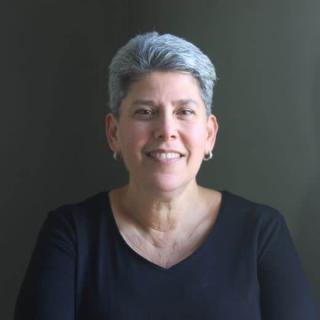
As a hospice volunteer at Hebrew SeniorLife, Cynthia Broner has formed close relationships with many patients and their family members. “There’s an intimacy that comes from supporting people as they approach the end of their lives,” she says. “It’s a tenderness that is so profound. We’re helping patients and their loved ones at a moment like no other.”
One family reached out for a hospice volunteer to read New York Times op-eds to their 100-year-old mother. “She had strong opinions, waving her hand dismissively at certain authors’ credentials,” Cynthia recalls. “Politics opened the door to increasingly deep conversations and memories, and by the end, she was introducing me as a girlfriend.”
As the volunteer services manager for Hebrew SeniorLife Hospice Care, I’m fortunate to hear about special connections like these every day. Here’s a closer look at our volunteer program and how hospice volunteers offer comfort and companionship to patients and families at the end of life.
About the hospice volunteering program
Training, preparation, and ongoing learning
When someone decides to volunteer with our hospice team, they receive extensive training before beginning their role so they feel comfortable and confident. That training includes 20 hours over a seven-week period, completed in cohorts that often become tight-knit along the way.
Training sessions are led by members of our interdisciplinary hospice care team, including physicians, nurses, social workers, and chaplains. Volunteers gain a well-rounded understanding of hospice care and learn how to support both patients and family members.
While our team is uniquely knowledgeable in Jewish traditions, we are trained to meet the spiritual needs of people from all backgrounds. “We see people from all kinds of religious and spiritual traditions, and part of our training involves learning the subtleties and different traditions of death,” says Cynthia.
New volunteers can accompany me on their first assignments so they feel supported as they begin working with hospice patients. By the time volunteers begin visiting patients on their own, they feel prepared for their role. Ongoing education and connection with other volunteers also remain important parts of the program, with monthly training sessions and optional social gatherings, such as holiday parties and a summer barbecue.
What do hospice volunteers do?
There are many ways to contribute as a hospice volunteer. Some of the roles our hospice volunteers take on include:
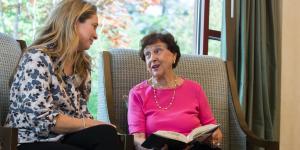
- Direct-patient volunteers who see patients and families at least weekly and engage in non-medical activities such as reading together, playing music or games, looking at photographs, baking, or organizing tasks
- Bereavement volunteers who support families for up to 13 months after a loved one has passed away
- Pet therapy volunteers who bring service animals to visit patients
- Special skills volunteers, like our videographer who creates meaningful legacy videos for families
- Shalom Care volunteers who are specially trained to support families when a patient is actively dying
Volunteers can also give family caregivers a much-needed break. While volunteers do not provide medical care, their presence alone makes a difference. “I’ve observed that caregiving often falls to one adult child, especially when families are spread across the country or around the world. Family members have expressed that having someone lovingly visit mom or dad once a week is a real relief,” says Cynthia.
Matching patients with volunteers
Beyond training, we work to thoughtfully match patients with volunteers based on each patient’s background, interests, and preferences. Finding the right connection makes visits more meaningful for everyone involved.
I remember one patient who was very hesitant to accept a volunteer, which is completely understandable. Not everyone feels comfortable opening their home to someone new, especially at such a vulnerable time. Even so, she seemed like someone who could benefit from some extra companionship.
After learning that she loved baking, we paired her with a volunteer who shared that interest. The two of them began baking together regularly, forming a relationship that brought joy and purpose to their time together.
How one volunteer found her way to hospice care
Cynthia has a long family history with Hebrew SeniorLife, dating back to weekly visits to her grandparents at Hebrew Rehabilitation Center. Decades later, her father moved into Orchard Cove in Canton, MA, where he lived his best life — even enjoying a later-in-life romance.
When he chose to enter hospice care on his own terms at age 97, Cynthia was deeply moved by his experience. “I saw how meaningful the time in hospice was for his life, and he had about as good a death as anyone can have. He still had his sense of humor, and he died as he lived. It was very powerful,” she says.
Witnessing that time in her father’s life stayed with her and inspired her to give back. “Seeing how gracefully my dad died, and how loving the care he received at Hebrew SeniorLife was, I knew I wanted to volunteer when I eventually retired,” she adds. When she retired years later, that feeling hadn’t faded. Cynthia began volunteering with Hebrew SeniorLife Hospice Care in 2018 and has been doing it ever since.
At first, she admits she worried the role might be emotionally difficult. “I was afraid I might feel depressed,” she recalls. But that hasn’t been her experience at all. “I have had really extraordinary experiences volunteering, meeting people whom I feel so privileged to have gotten to know. I have so much satisfaction knowing that I am making the patients’ paths easier, and also making it easier for their families,” she says.
During her visits, Cynthia has shown up for hospice patients in many different ways: reading together, organizing art collections, alphabetizing record albums, writing holiday cards, or simply sharing conversations over a cup of tea.
Interested in becoming a hospice volunteer?
If you are interested in making a difference in the lives of others during an important stage of life, volunteering with hospice can be a powerful way to give back. Hebrew SeniorLife Hospice Care’s volunteers provide companionship and comfort to patients and families, while gaining a deep sense of purpose in return.
We are here to guide you through the application process and the meaningful work ahead. While we are not currently accepting applications, I’d be happy to answer your questions and add you to our waitlist. Please call me at 781-234-9186, and I’ll reach out when it’s time to apply.
Blog Topics
Learn More
Hospice Care Volunteers
Supported with training and mentorship, Hebrew SeniorLife hospice volunteers are the heart of our hospice program. Learn how you can become a hospice volunteer.
Hospice Care
Hebrew SeniorLife Hospice Care works to bring meaning and fulfillment during the final stage of life, in addition to providing comfort and management of symptoms related to a patient’s illness.